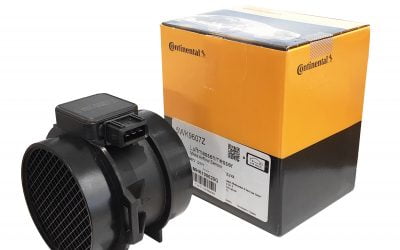
Heres a little update to a our previous post back in 2018!
When diagnosing TD5 running issues, the MAF sensor is often one of the first components brought into question. Over the years, we have seen a wide mix of sensors on the market, with some performing well and others giving readings that simply do not stack up when properly logged.
Historically the Continental MAF sensor has proven to be one of the better reference points for TD5 testing as this is the one Land Rover fitted from the factory. The problem now is that these units have become obsolete and are no longer a realistic off the shelf option for owners.
That leaves the Delphi unit as one of the main replacement choices currently available along sides Britpart own brand one, which we previously touched on in the previous blog post.
Rather than dismissing current options simply because the older Continental unit performed strongly, we wanted to look at the data properly and compare live logged behaviour at idle and around 2000 rpm to see how the replacement sensor stacks up in real world use.

Delphi VS Continental MAF Sensor
Why MAF logging matters
A MAF sensor cannot be judged purely on whether the engine starts and runs. To properly assess one, you need to log it and look at the values it is producing across known operating points.
Incorrect or unstable MAF readings can affect:
Fueling behaviour
Throttle response
Smoke output
General drivability
Overall calibration accuracy
This is why logging remains far more useful than guesswork or simply swapping parts and hoping for the best.
Expected TD5 MAF behaviour
As a general guide, on a healthy TD5 we would usually expect to see:
At idle:
Around 55 to 61
At roughly 2000 rpm:
Around 185 to 200
These figures are a useful baseline when checking whether a sensor is behaving within a believable range.
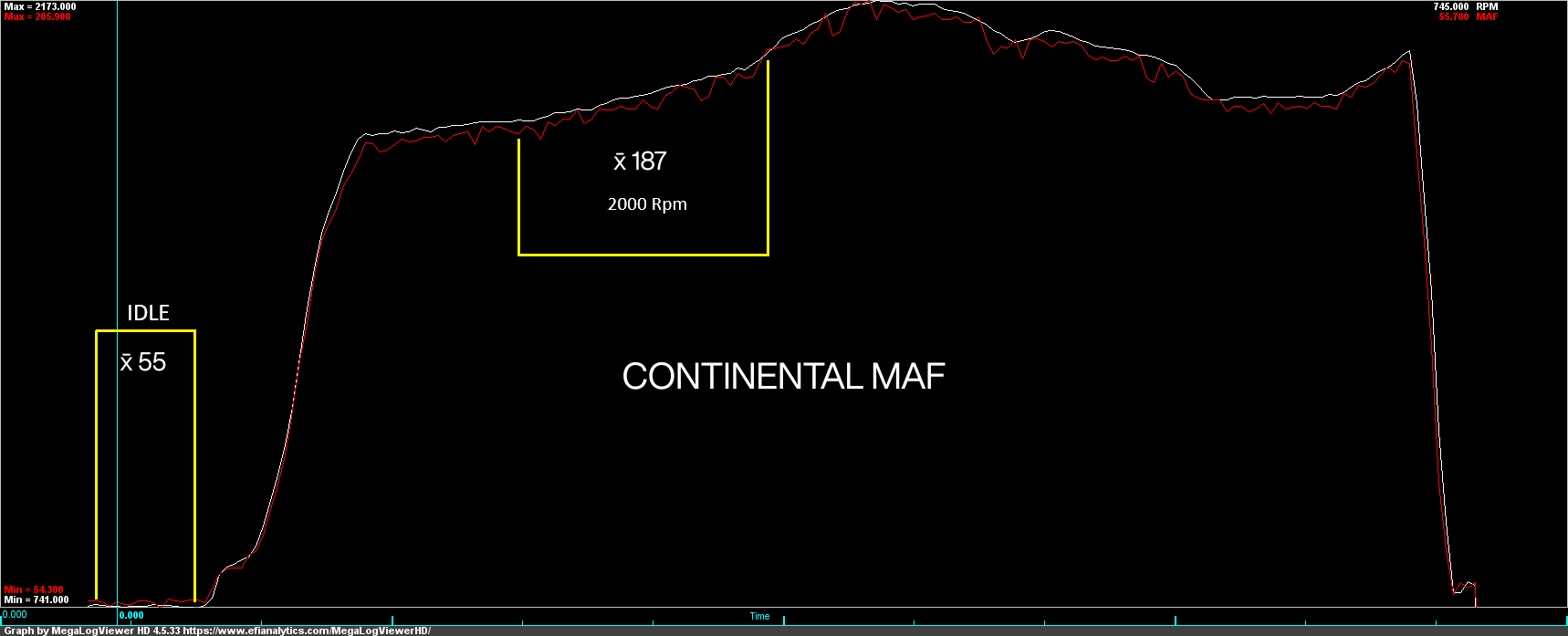
Continental TD5 MAF x̄ 187
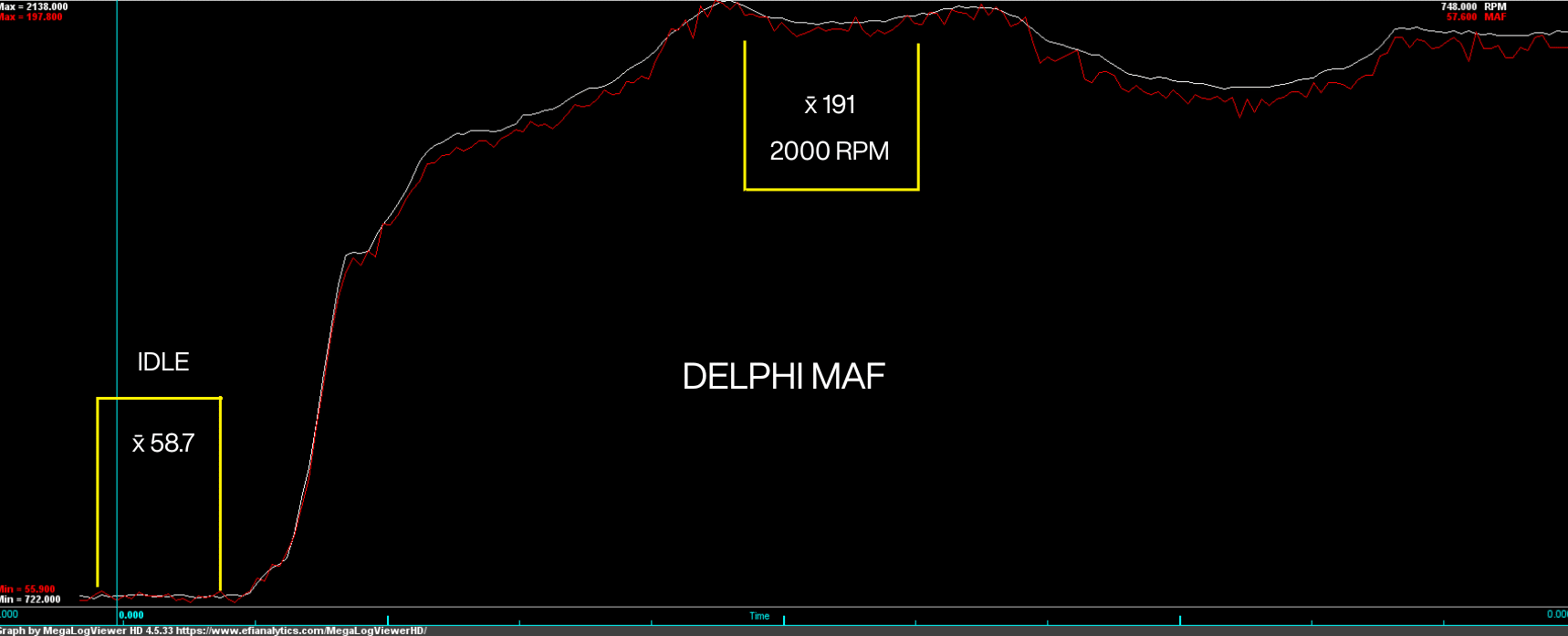
delphi maf
What the comparison showed
In our testing, the Continental sensor still came out as the stronger benchmark overall, which is consistent with what we have seen historically. Its signal was slightly cleaner and it tracked very well through the tested range.
However, the important point here is that the Delphi unit still produced usable and believable readings that sat within the range you would expect from a serviceable TD5 MAF sensor and thats what is important
Yes, the Continental unit may still be the better benchmark unit, but since it is now obsolete, the Delphi should be viewed for what it is: a current and practical replacement that can still perform well when the readings are checked properly.
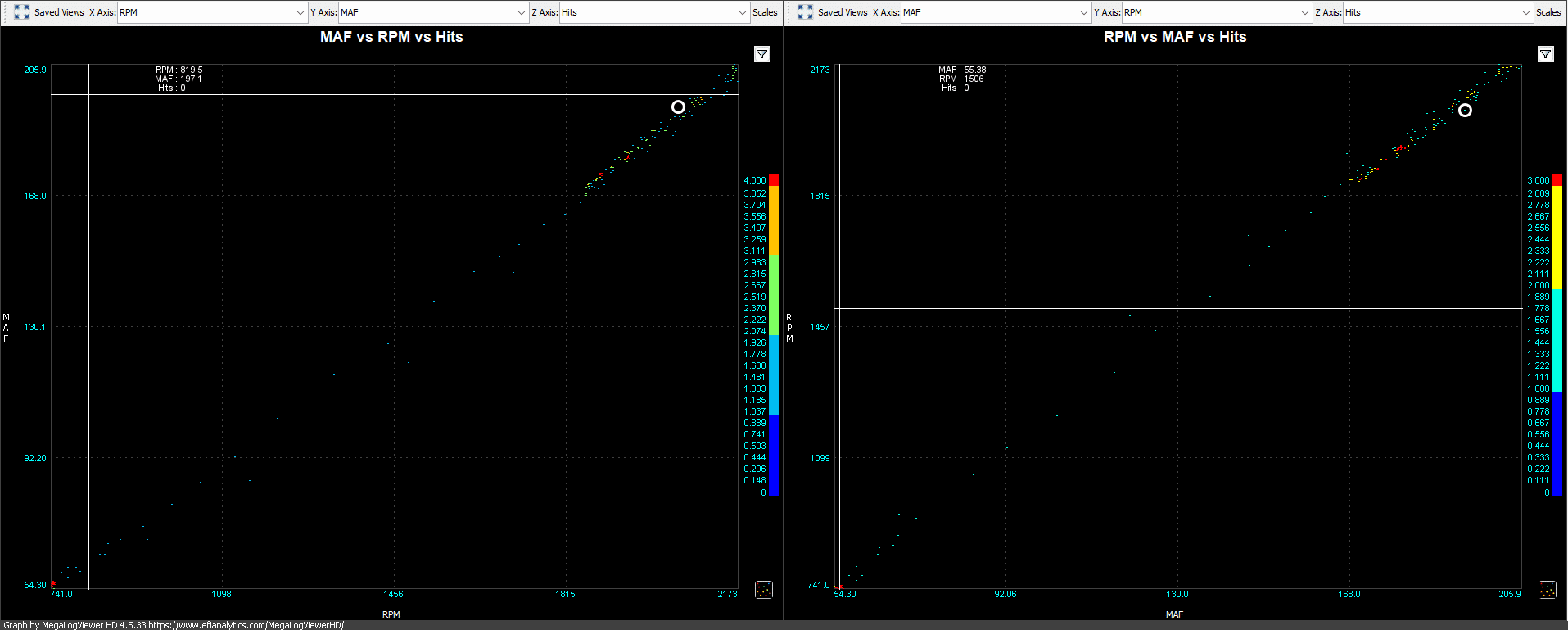
graph scatterboth
The real issue is poor quality sensors
What tends to cause confusion is when people compare a decent currently available replacement against an older benchmark part and assume anything different must automatically be bad.
That is not the right way to assess a MAF sensor.
The real problem is not that the Delphi is slightly different to Continental. The real problem is that many low quality sensors on the market produce readings that are clearly wrong, unstable, or outside believable limits.
When tested properly, the Delphi remains a sensible option where an original Continental is no longer available.
With Continental TD5 MAF sensors now obsolete, owners need a replacement that still gives sensible live data and can be assessed properly during diagnosis.
From our testing, the Delphi unit remains a valid option and should not be dismissed simply because the old Continental benchmark was slightly stronger.
The important thing is not chasing an obsolete part.
It is making sure the sensor fitted to the vehicle is producing believable readings and that the vehicle is logged correctly.
If you are unsure whether your TD5 MAF sensor is behaving as it should, proper live logging is the best place to start, either a Nanocom or Just Map It will be able to help with this.
Need help diagnosing your TD5 properly?
Get in touch with us were sure we could help